
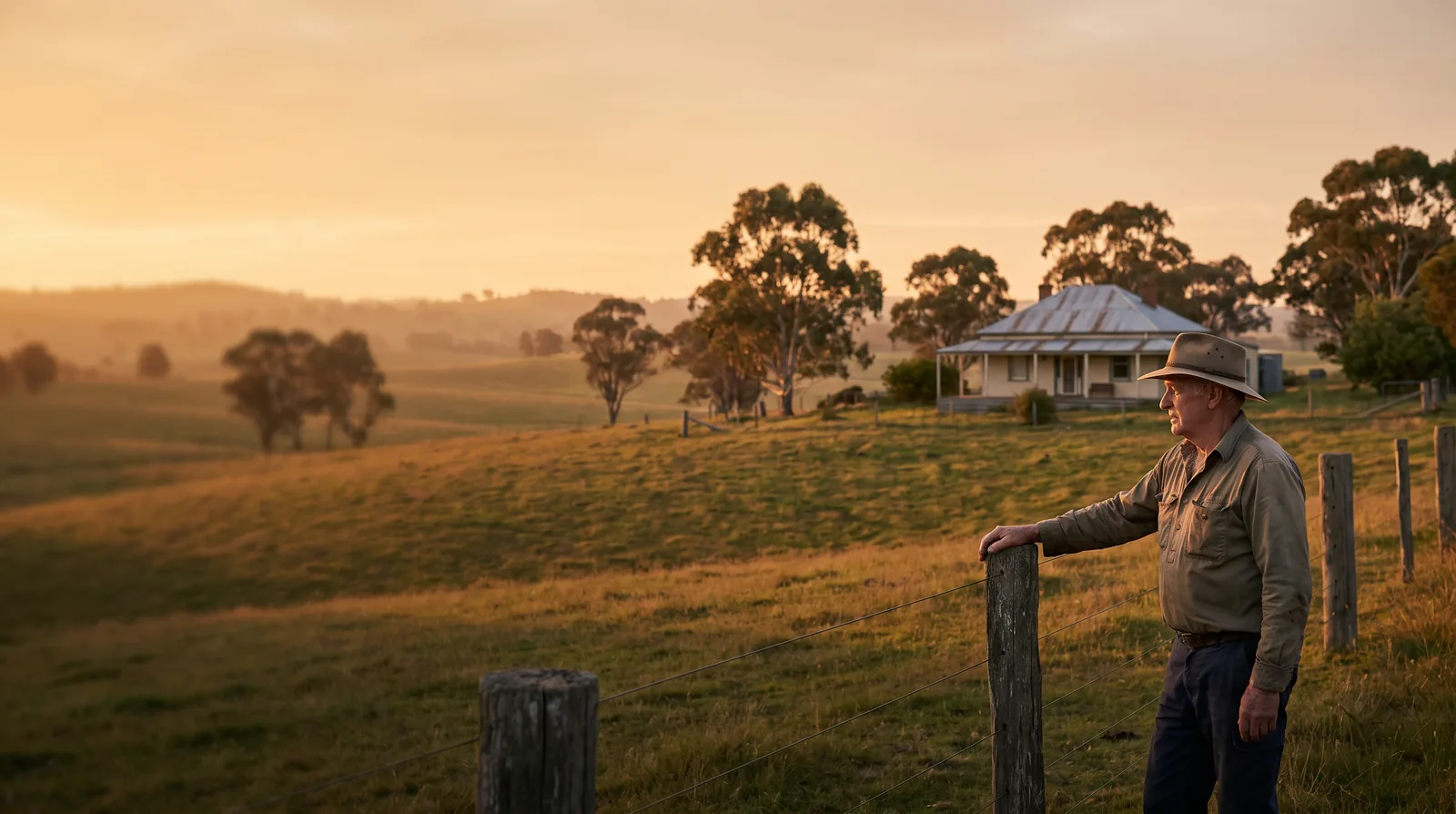
For many Australian farming families, succession planning is no longer something that can comfortably be left for “a few years down the track”.
A combination of an ageing agricultural workforce, increasingly valuable farm assets, changing family structures and more sophisticated farming businesses is bringing succession to the forefront.
For accountants, solicitors, financial planners, agricultural consultants and finance professionals, this represents more than a challenge facing their clients. It is becoming an important area of professional advice in its own right.
Australian agriculture is facing a generational transition
Australia’s agricultural workforce is considerably older than the workforce generally.
According to the Australian Bureau of Statistics, almost 30% of Australians working in agriculture, forestry and fishing at the time of the 2021 Census were aged 60 or older. Across all Australian industries, the equivalent figure was around 11%.
| Group | Share of workers aged 60 or older |
|---|---|
| Agriculture, forestry and fishing | almost 30% |
| All Australian industries | around 11% |
Source: Australian Bureau of Statistics, 2021 Census. Figures are approximate, as reported.
Earlier ABS agricultural data similarly found that the average Australian farmer was 58 years old in 2018–19 and had been farming for an average of 37 years.
58
Average age of an Australian farmer, 2018–19
37 years
Average time that farmer had spent farming
Those numbers point to something unavoidable.
Over the coming years, a significant number of Australian farm businesses will need to answer a fundamental question: what happens next?
But succession is rarely as simple as deciding who receives the farm.
The assets involved have become increasingly valuable
At the same time as farm owners have aged, the value of agricultural land has increased substantially.
9.8%
Sustained over ten years, that rate compounds to roughly two and a half times the starting value.
Source: ABARES, March 2026. The compounding figure is arithmetic on the reported average annual rate, not a separate measurement.
This changes the succession conversation.
A farming family may be dealing not simply with a business that provides an income, but with millions of dollars of land, livestock, machinery, houses, investments and other assets accumulated over several generations.
There may also be substantial debt, different ownership structures and different contributions made by family members over many years.
The stakes are therefore becoming higher.
A decision that might once have been discussed informally around the kitchen table can now have significant taxation, legal, financial, lending, retirement and estate-planning consequences.
The family farm remains a family issue
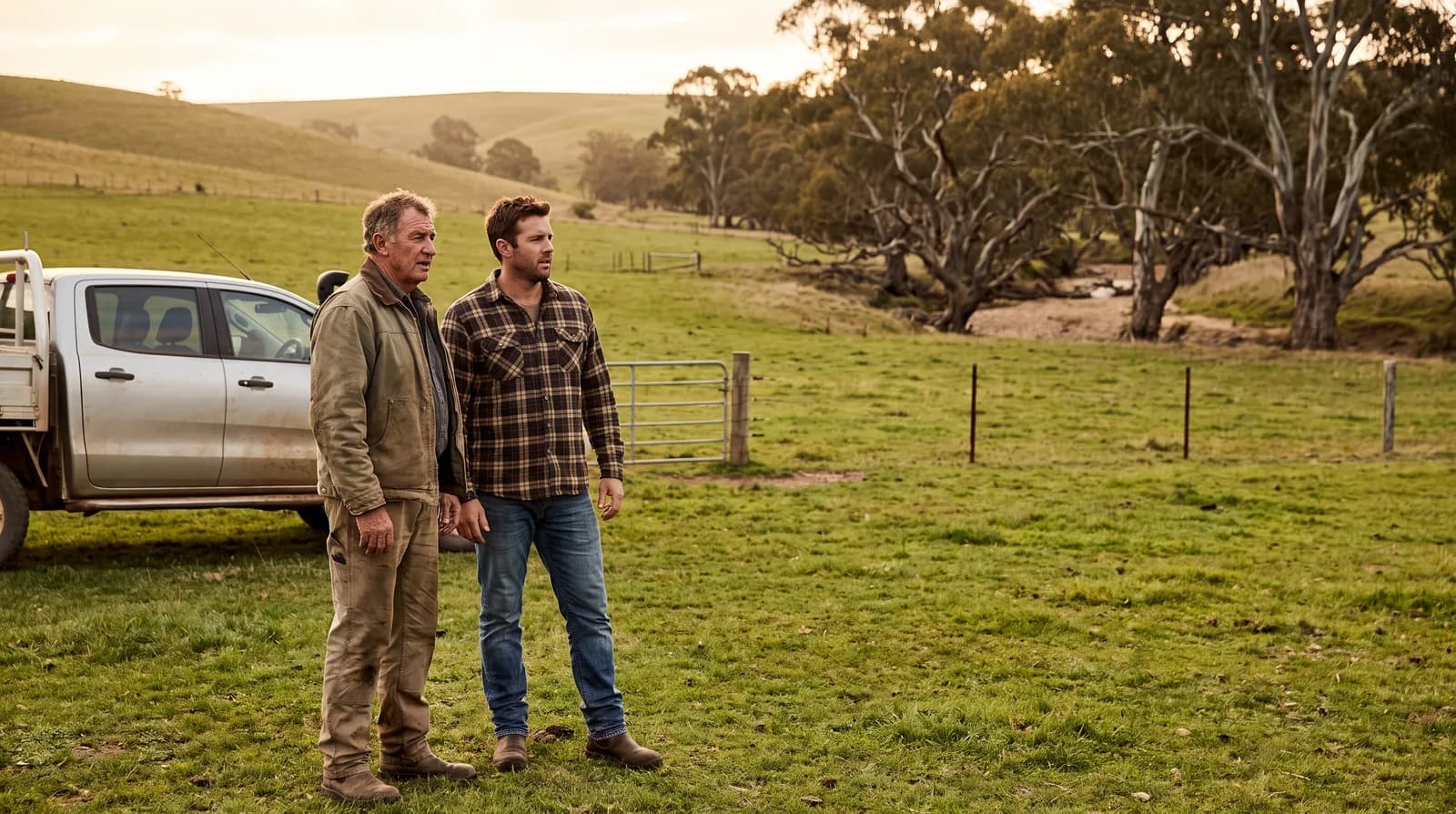
Despite the increasing sophistication of Australian agriculture, the family farm remains the most common ownership structure in the sector.
That creates a particular kind of complexity.
Consider a reasonably typical situation.
One child has spent 20 years working on the farm and wants to continue farming. Another has built a career in Melbourne, Sydney or Brisbane. A third may have received financial assistance years earlier to purchase a home. Mum and Dad want enough capital to retire comfortably, but they also want the farm to remain intact.
Then come the difficult questions.
- What does fair mean?
- Should the child working on the farm receive more?
- Can the farming operation afford to pay out the other children?
- Where will the parents live?
- Who ultimately controls the business?
- What happens if one child wants to sell?
- What has previously been promised, and does everyone remember that promise in the same way?
These are not questions that can be solved by preparing a will alone.
They require a process.
That creates an opportunity for trusted advisers
Most farming families already have professional relationships around them.
They have accountants, solicitors, lenders, financial planners, agricultural consultants and other advisers who may have worked with the family for years.
Those advisers often know the business, understand its history and, importantly, have already earned the family’s trust.
The opportunity is for those professionals to move beyond responding to individual succession-related transactions and help clients navigate succession as a structured advisory engagement.
That does not mean one professional suddenly becomes the accountant, lawyer, financial planner and family facilitator.
Quite the opposite.
Good succession planning is multidisciplinary.
The opportunity is to help the family establish what they are trying to achieve, identify the issues that need to be resolved, gather the right information, involve the appropriate family members and then bring specialist professional advice into the process when it is required.
Succession planning starts before the transaction
Too often, professional advisers become deeply involved only after a family has decided what it wants to do.
The accountant is asked about tax consequences.
The solicitor is asked to document an agreement.
The lender is approached about finance.
The financial planner is asked whether Mum and Dad have enough to retire.
But the hardest work often happens before any of those transactions.
It involves discovering what each person actually wants, what assumptions have been made, where expectations differ and whether the proposed outcome is financially and practically achievable.
That is where an emerging advisory opportunity exists.
It is the space between a family saying, “We really need to do something about succession”, and the professionals eventually implementing the decisions.
Australia’s demographic and economic trends suggest that more farming families will be entering that space.
For advisers who already serve rural and regional clients, succession planning therefore represents more than an occasional conversation.
It is increasingly becoming a substantial, structured and valuable professional service — and one that many existing clients are likely to need.